Why Everyone Loves Lisbon
by Marla Norman & Michel Thibault
photos by Marla Norman unless otherwise noted
We’ve just landed in Lisbon and are stunned by the crowds at the airport. On a previous visit way back in 2018, traffic was brisk, but nothing like this. Lines for rental cars snake back and forth for yards. It’s difficult to verify where Hertz ends and Enterprise begins.
As Michel and I make the queue, an English couple in front of us is conversing with an American couple who have just purchased a home in Lisbon. (I’m not eavesdropping, I swear. It’s just that the lines are so tight it’s impossible not to hear.)
“You’ll absolutely ADORE Lisbon. We moved here from London two years ago. The weather is fabulous. So much history and culture. The Portuguese are lovely. Everyone speaks English.”
And…that’s it! What’s not to like about this charming city. Just be ready to share the affection with many fellow travelers. Portugal welcomes an average of 32 million visitors annually, although the population of the entire country is 11.4 million. (Statistics from Turismo de Portugal) December through February see a drop in tourism, but that’s a brief window.
Back to the present….After a good 45 minutes in the rental car line, we finally have our vehicle. We’ve also learned from our new best friends, the Brits and the Americans from Connecticut, about recently-opened restaurants and wine bars. (In the end, eavesdropping is an extraordinarily useful travel skill.)
Our hotel, The Ivens, is in the old town. And we are immediately enchanted. The property dates back to the 19th century but has been thoughtfully updated while still preserving the original character and architectural details. After settling in our room, we head down to the bar. (It’s been a long day.) The place is packed. We squeeze onto a banquette and order.
“Just get in?” asks the woman next to me. “I’m Alice from San Diego.”
Meanwhile, Michel is already conversing with Richard from Chicago, “I’m surprised to see the number of Americans here,” he says.
“Yup,” Michel responds, “Everyone loves Lisbon,”
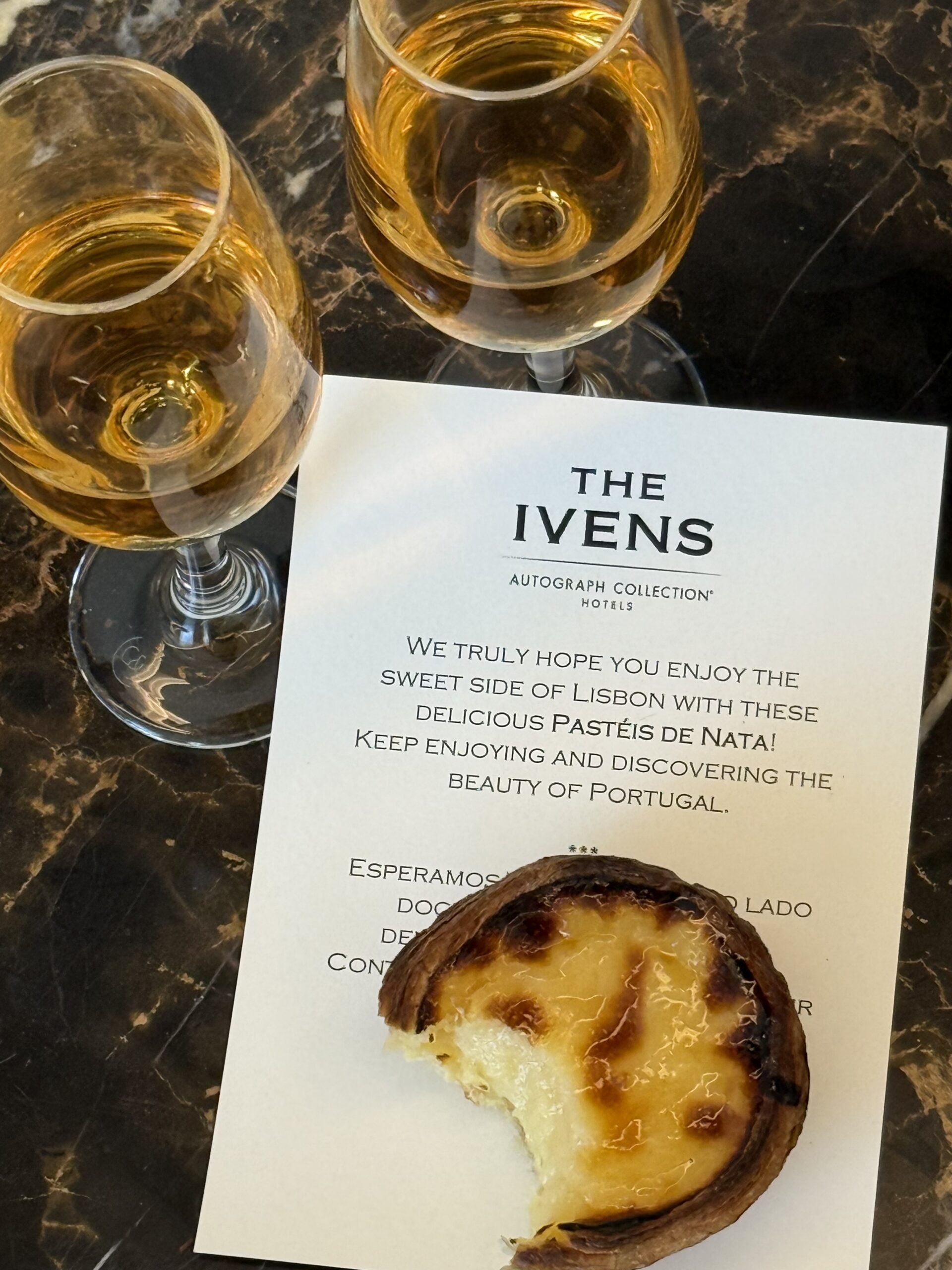
White port & Pastéis de Nata welcomes guests at The Ivens Hotel.
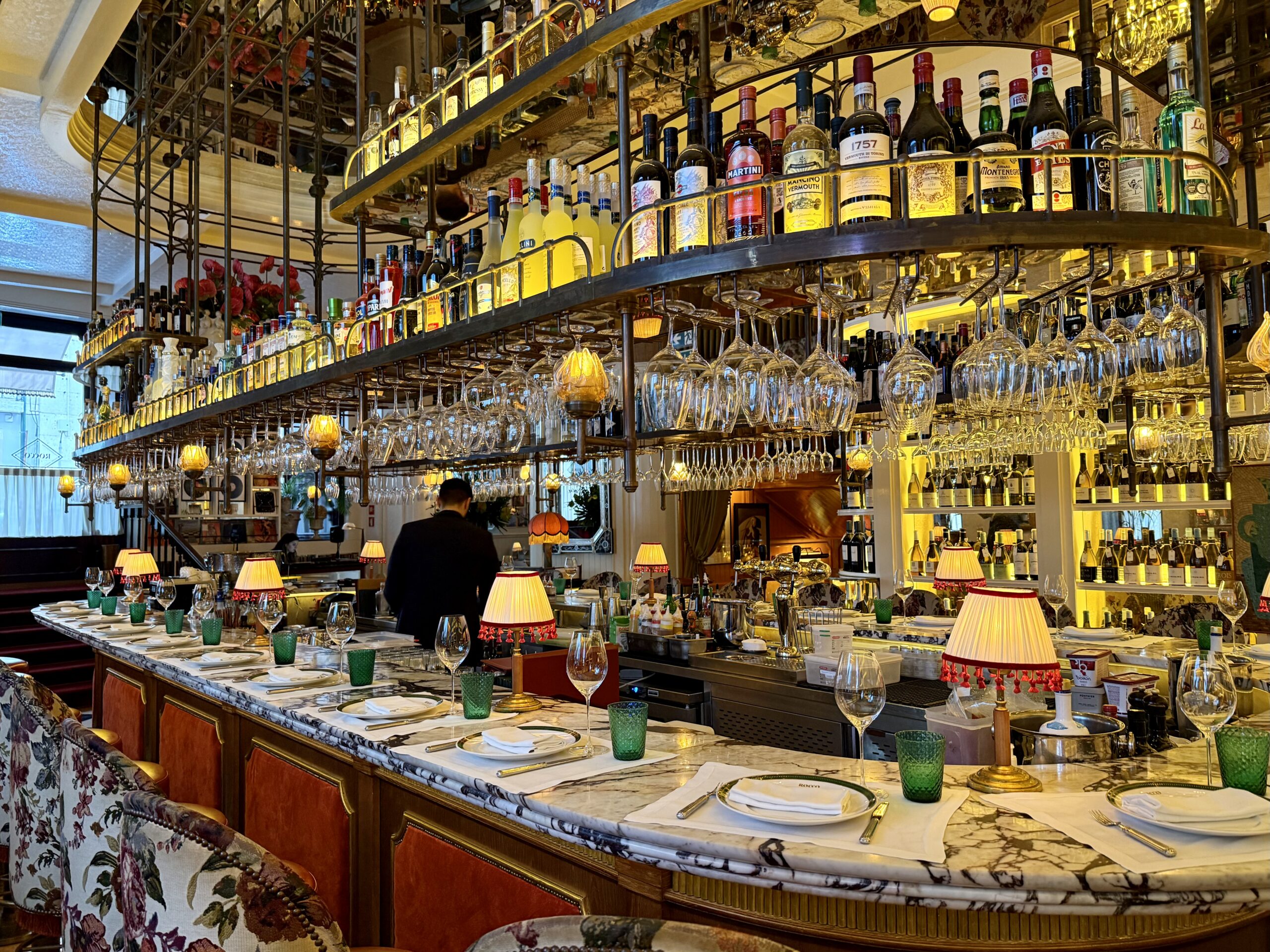
Bar Rocco at The Ivens is visually stunning with an extensive wine list and excellent cocktails.
LISBON LANDSCAPES
The following morning, we join a long line of tuk-tuks to tour the city. (NOTE: We booked through Get Your Guide.) João, our guide, apologizes, explaining “There are over 1,000 tuk-tuks registered in Lisbon. It feels as if we’re behind a few hundred this morning!”
To help us reacquaint with Lisbon, João provides a quick overview of the city’s history, beginning in 714 AD, when the Moors ruled Portugal. For nearly 500 years, during this period, Lisbon flourished as an international trade center. In the 13th century, Christian rulers took over, but thanks to the scientific and mathematical advances of their predecessors, Portuguese navigators, including Vasco da Gama sailed to India, Africa and South America. The wealth achieved through these expeditions was staggering. Extraordinary caches of gold, gemstones, and spices created extensive commercial activity. Grand buildings and extravagant palaces were built to showcase Portuguese prosperity.
Then, in 1755, disaster struck. A series of earthquakes destroyed two-thirds of Lisbon in a matter of minutes, only to be followed by a Tsunami that swept away entire sections of the city. Over 40,000 people perished in the devastation. For the next thirty years, Lisbon rebuilt itself, under the rule of King Dom José I. We meet the King astride his horse via a 50-foot tall statue in the center of Praça do Comércio, the first stop on our tour. The enormous plaza sits right on the edge of the Tagus River, surrounded by numerous government buildings that include the Ministries of Finance, Defense and the Portuguese Supreme Court.
Our next stop is the oldest church in Lisbon, Catedral Santa Maria Maior, which has had many reincarnations. The Romans first built a temple on the site between the 2nd and 1st century BC. Later the Moors built a mosque on the same location around 700 AD. Finally the current church was constructed in 1147.
The Cathedral also houses the Tesouro da Sé (Museum of the Treasury) where four exhibition halls display priceless ecclesiastical items, clerical vestments, sacred relics, and precious jewels. Most impressive is a nativity scene with over 500 terracotta figures created by sculptor Joaquim Machado de Castro in 1766.
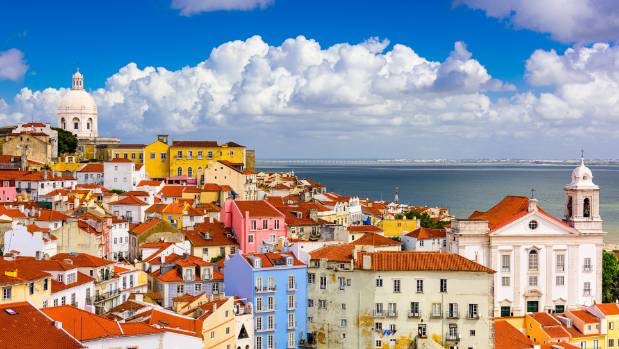
From the cathedral, we tuk-tuk to São Vicente, one of the city’s oldest neighborhoods. The Feira de Ladra flea market is here, but most impressive are the views. We can see the Tagus River, endless terracotta rooftops and the spectacular Castelo de São Jorge, a fortress dating back to at least the 8th century BC. Prior to the Portuguese, Phoenicians, Carthaginians, Romans and Moors occupied the site.
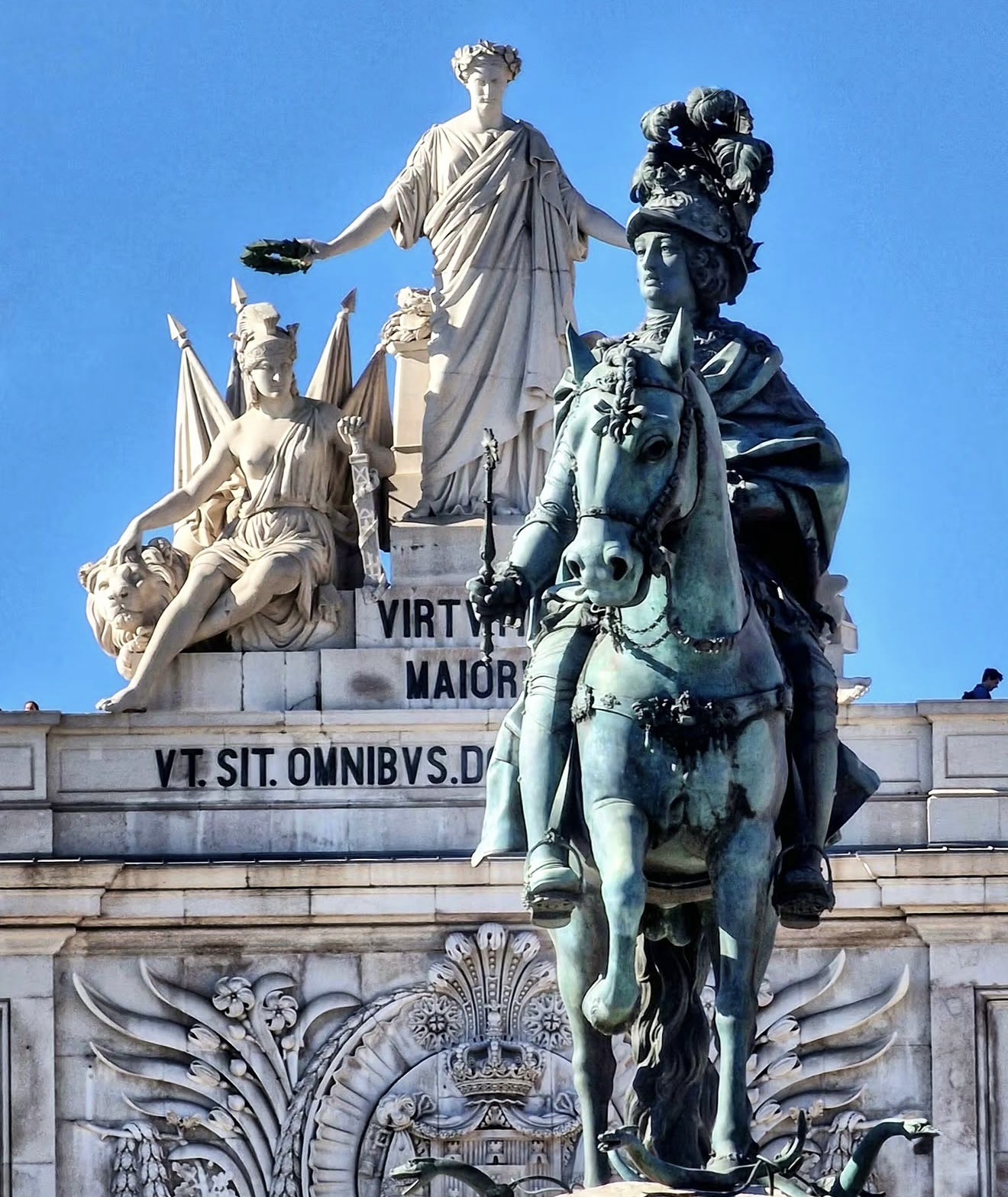
Statue of King Dom José I in the Praça do Comércio
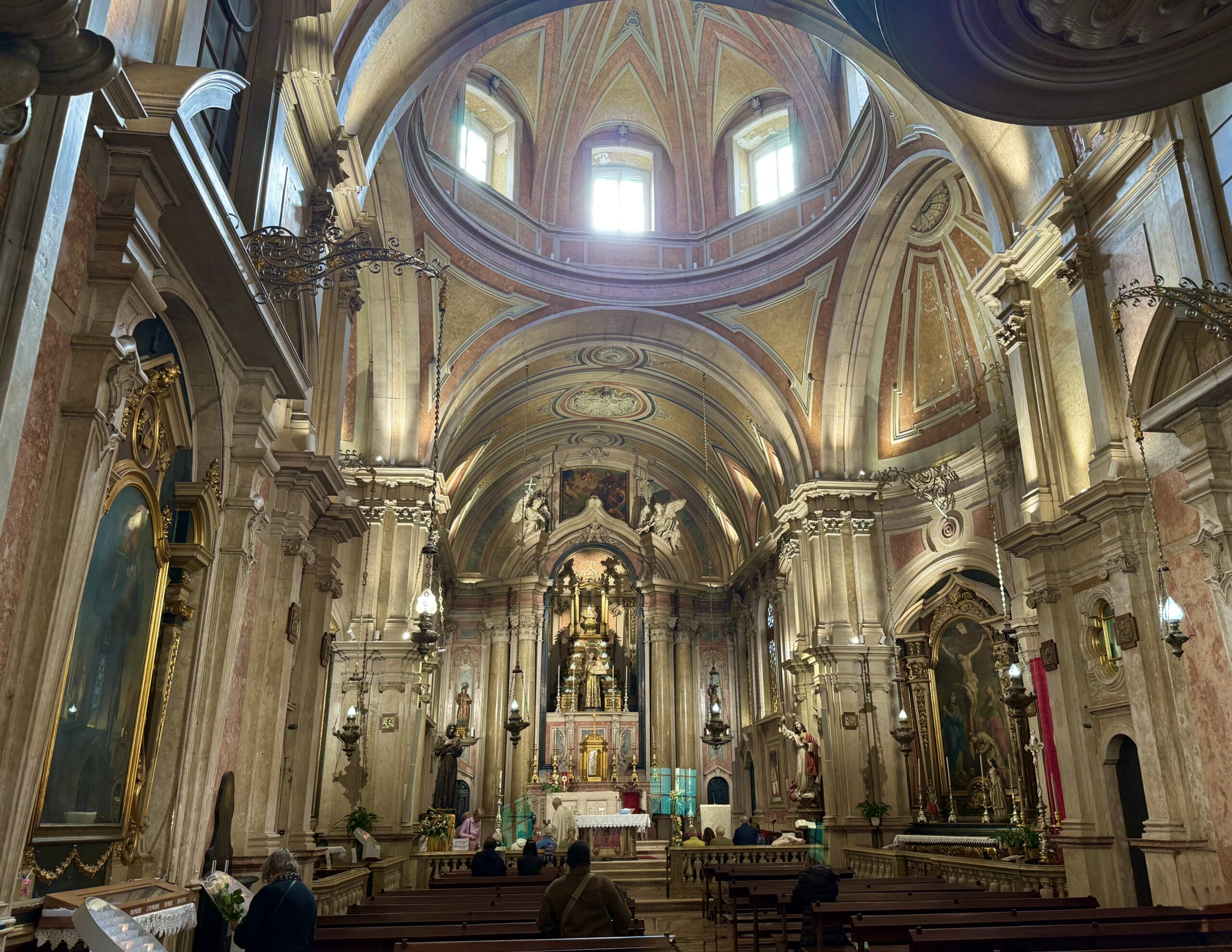
Interior of Catedral Santa Maria Maior, the oldest church in Lisbon.
TIME OUT ⏰
Of course, we’ve worked up an appetite after all the touring. Our guide drops us off at Time Out Market, a food hall featuring 40 different food booths and bars, with local chefs dishing up their best cuisine.
Even better, friendly Lisboetas sitting nearby offer suggestions for additional petiscos (small bites) and vinhos. Following their advice, we visit Marisqueira Azul, where we sample clams, sardines and bacalhau (cod). At Café de São Bento thick, luscious steaks are served in a rich sauce perfect with a pile of fries on the side. There’s even a two-star Michelin chef — Henrique Sá Pessoa — to top off the menu, with prices many times more “barato” than at his restaurant also named Henrique Sá Pessoa. We try Black Pork Cheeks (15,50€) and Asparagus & Ham (13,50€)
To wash down all these regional specialties, we find a seat at O Bar da Odette. From reds to whites, through rosé and bubbly, everything here is from Portuguese wine-making regions — all meeting the demanding criteria of Odete, who tends to avoid the big-name wines for lesser-known national treasures. On this very warm day, we particularly loved the espumante (sparkling wines) from Távora-Varosa — elegant, crisp — an easy pairing.
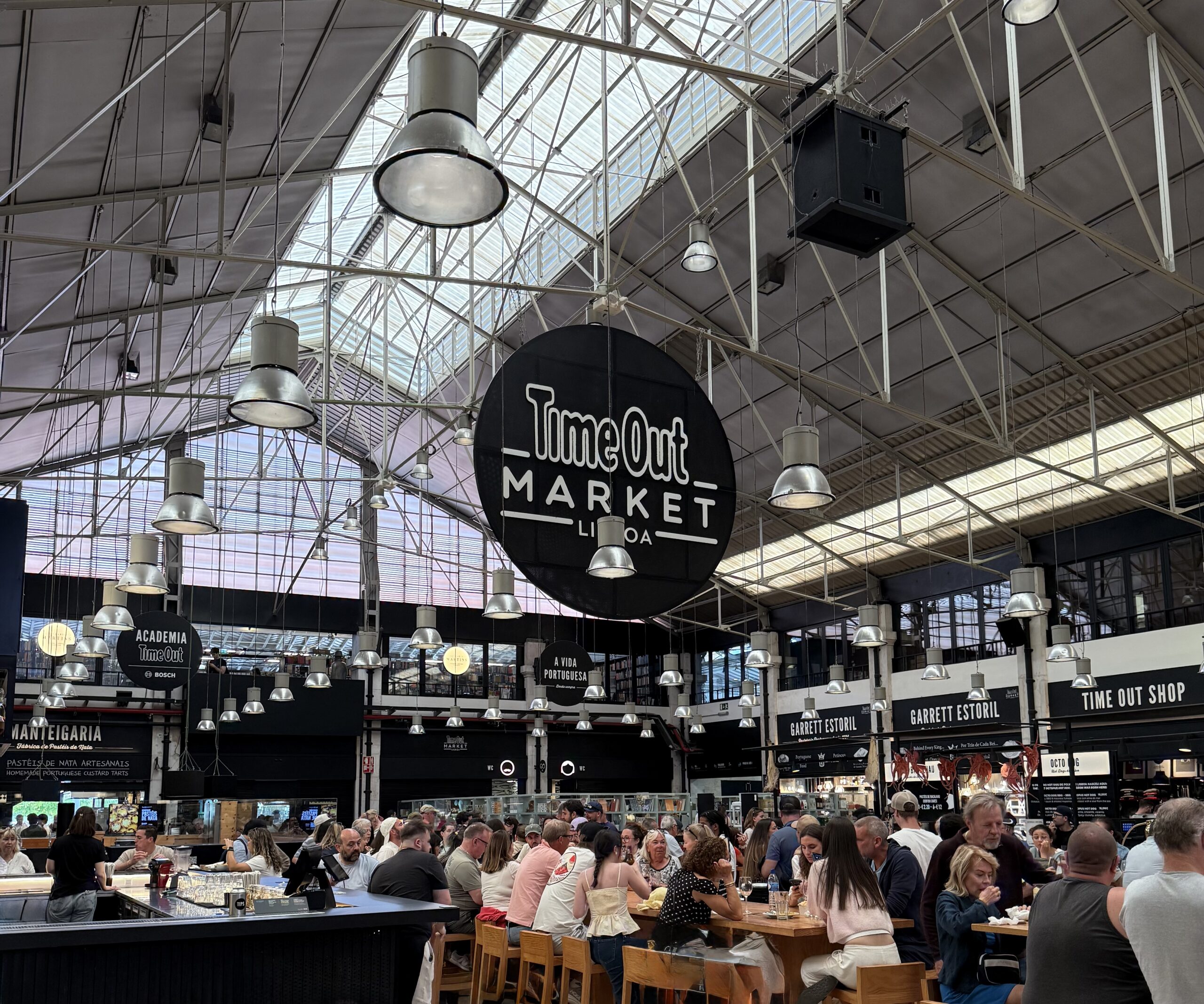
Time Out Market Lisboa – features 40 restaurant kiosks and bars.
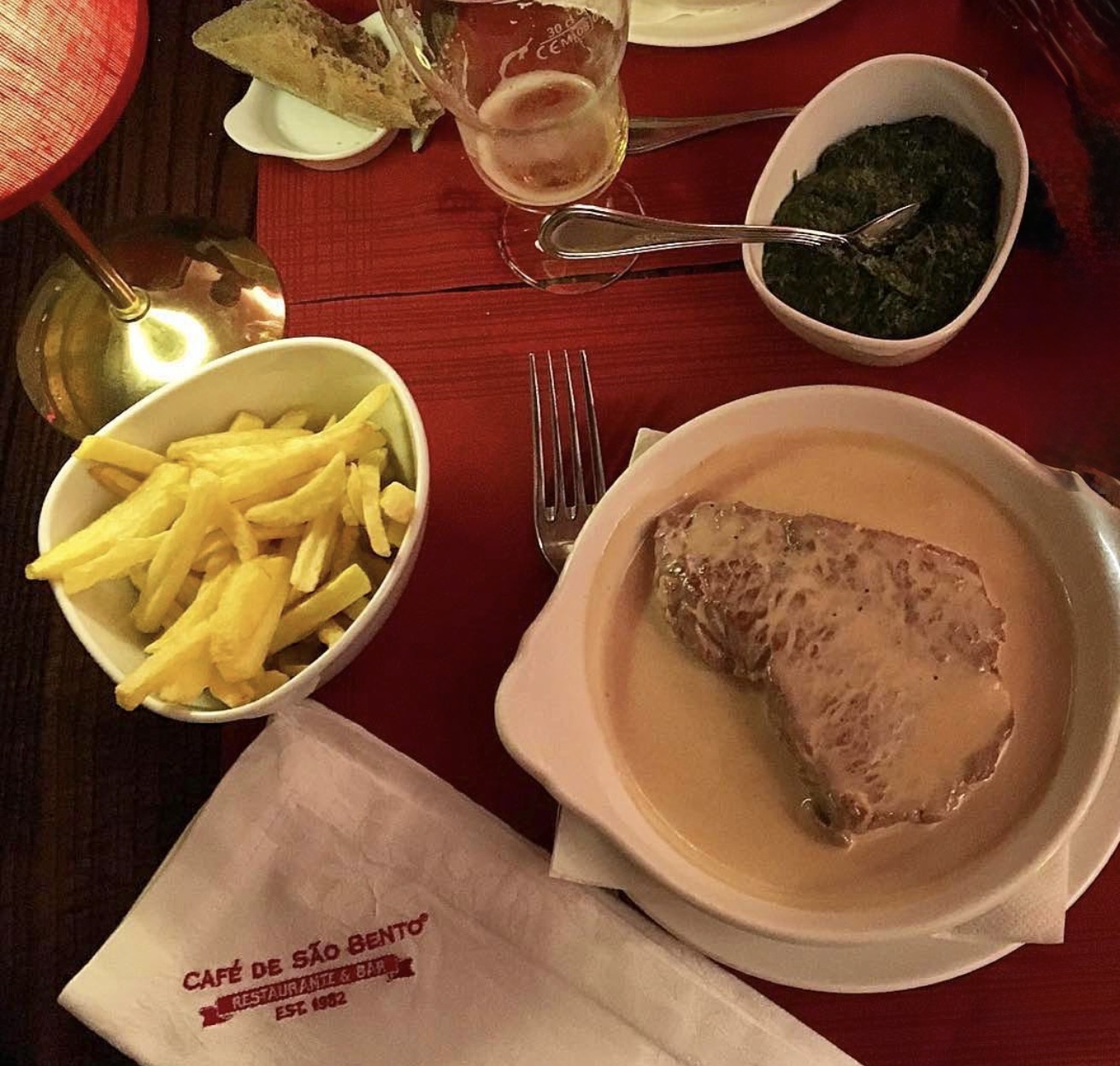
Café de São Bento serves up thick steaks with cream sauce and plenty of fries.

Two-star Michelin Chef Henrique Sá Pessoa at Time Out Market Lisboa. Photo courtesy of Henrique Sá Pessoa.
SINTRA: CASTLE KINGDOM
A perfect day trip, about 30-minutes from Lisbon is Sintra. The twisty, winding roads are lovely and Lisbon’s bustling cityscapes quickly fade to thick forests. The distant blue of the Atlantic blends with cerulean skies. This lush, tranquil scenery made Sintra a popular summer get-away for the Portuguese aristocrats over the centuries. Many of these singular residences are now open to the public and have been classified as UNESCO World Heritage Sites.
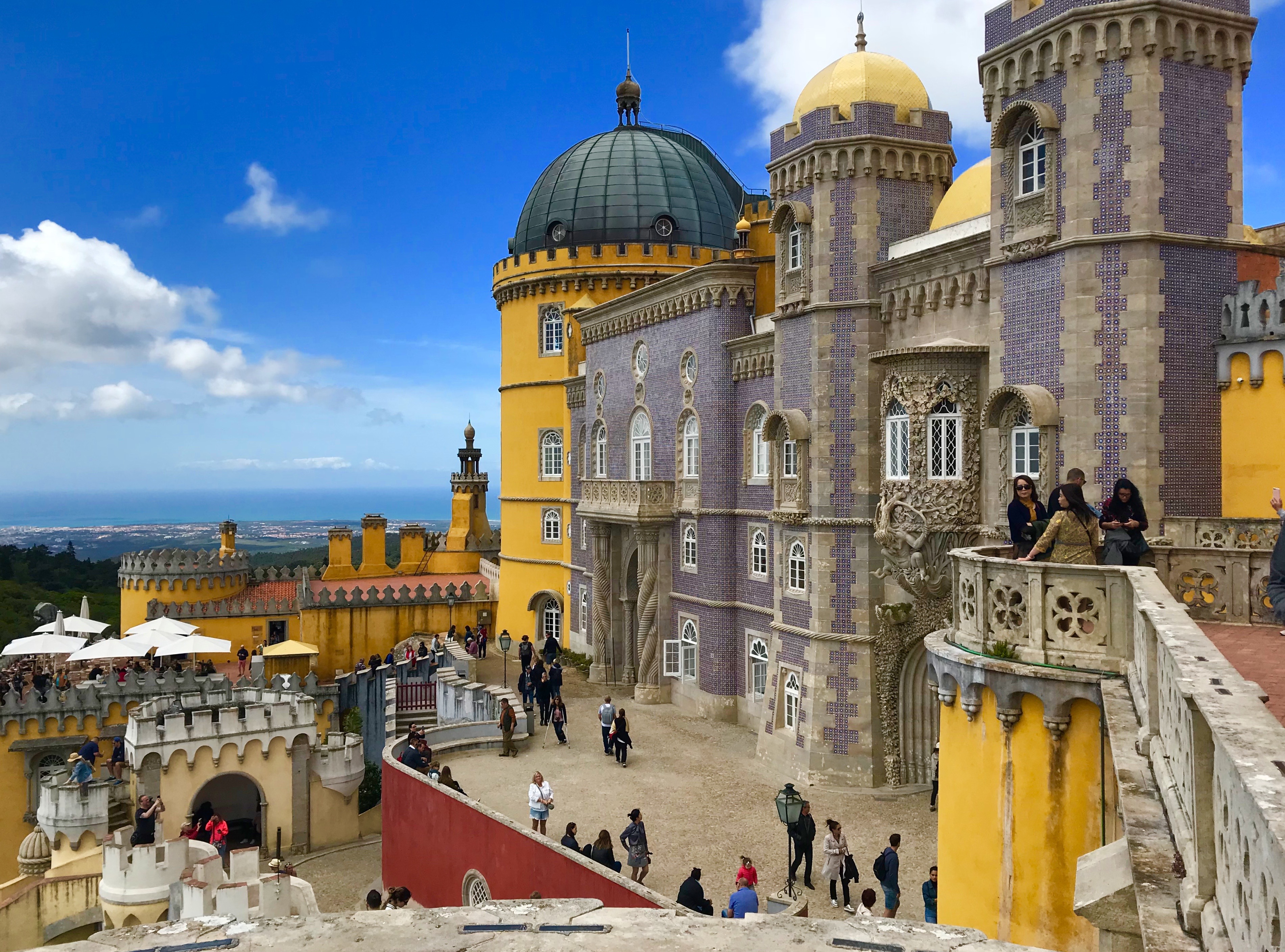
Palácio da Pena, with it’s lemon-colored towers and ornate turrets.
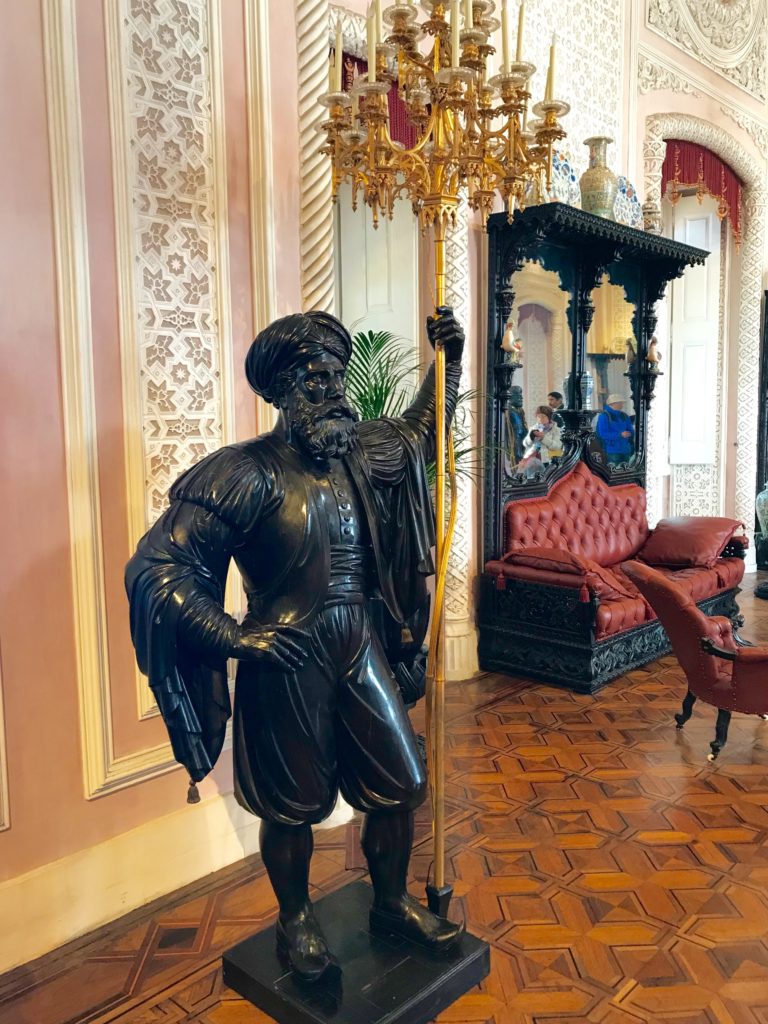
Lavish interiors at Palácio da Pena.
Palácio da Pena is first on our list. We breeze up the narrow winding roads, thankful we’d rented a Mini Cooper. Anything much larger would get stuck. From several miles out we spot the brilliant lemon-colored towers and red turrets of the palace.
Ferdinand of Saxe Coburg-Gotha, the artist-husband of Queen Maria II, began building his dream castle in 1840. The result is an utterly unique concoction of Victorian and Moorish architecture with a dollop of Ferdinand’s beloved Bavaria in the mix as well. The interiors are equally extravagant with heavy furniture and trompe l’œil murals. A large Meissen porcelain collection is one of the more impressive displays.
The palace sits on 5 hectares (12.35 acres) which include numerous gardens and walking paths. We make good use of the map provided at the entrance to explore small lakes, greenhouses and aviaries. The many rare plants and landscapes are astonishing. And the views again are remarkable.
Leaving the property we get a little lost, once more, on the twisty narrow roads. Somehow we wind up in an alley so tiny, even the Mini can’t squeeze through. We make a quick u-turn and suddenly a motorcycle policeman pulls up alongside us. “You made an illegal turn,” he yells. “Show me your driver’s license, passport and car registration.”
We can’t believe our bad luck or how irate the cop seems to be. “I must give you a ticket,” he continues. “This will be expensive. At least 300€.”
Michel gasps. I shriek.
The cop nods. “I know. It’s a lot of money. Maybe I can do something. Follow me.”
He leads us to an isolated parking lot. Michel has already pulled out his wallet and flashes 120€ in cash. “Will this be enough? I don’t need a receipt,” Michel says sarcastically.
“That’s good!” answers the cop, snatching the money and jumping back on his motorcycle. I’m in shock. Michel is furious. Nevertheless, we take a few deep breaths and continue …. (More on this later.)
Up next on our tour is Quinta da Regaleira, situated deep within a forest, the place is a little gloomy and forbidding. The estate’s primary owner was António Augusto Carvalho Monteiro, a wealthy Brazilian entrepreneur, who was fascinated with alchemy, Free Masons, Knights Templar and the occult in general. The haunted-looking Regaleira was clearly a perfect fit for his spooky hobbies.
The five-story palace is richly decorated with embossed ceilings, paneled walls and ornate fireplaces. The chapel is adorned with frescoes and stained glass windows. We’re intrigued by the extensive system of tunnels that runs under the property. There are grottoes, another chapel and a lake. Even more curious, is a site called the Initiation Well, which has nothing to do with water, but is a deep, walled pit with spiraling stairs running along the walls, designed to represent Dante’s Nine Circles of Hell. (YIKES!) Monteiro supposedly used the “Well” for ceremonial purposes. Fascinating and more than a little creepy at the same time.
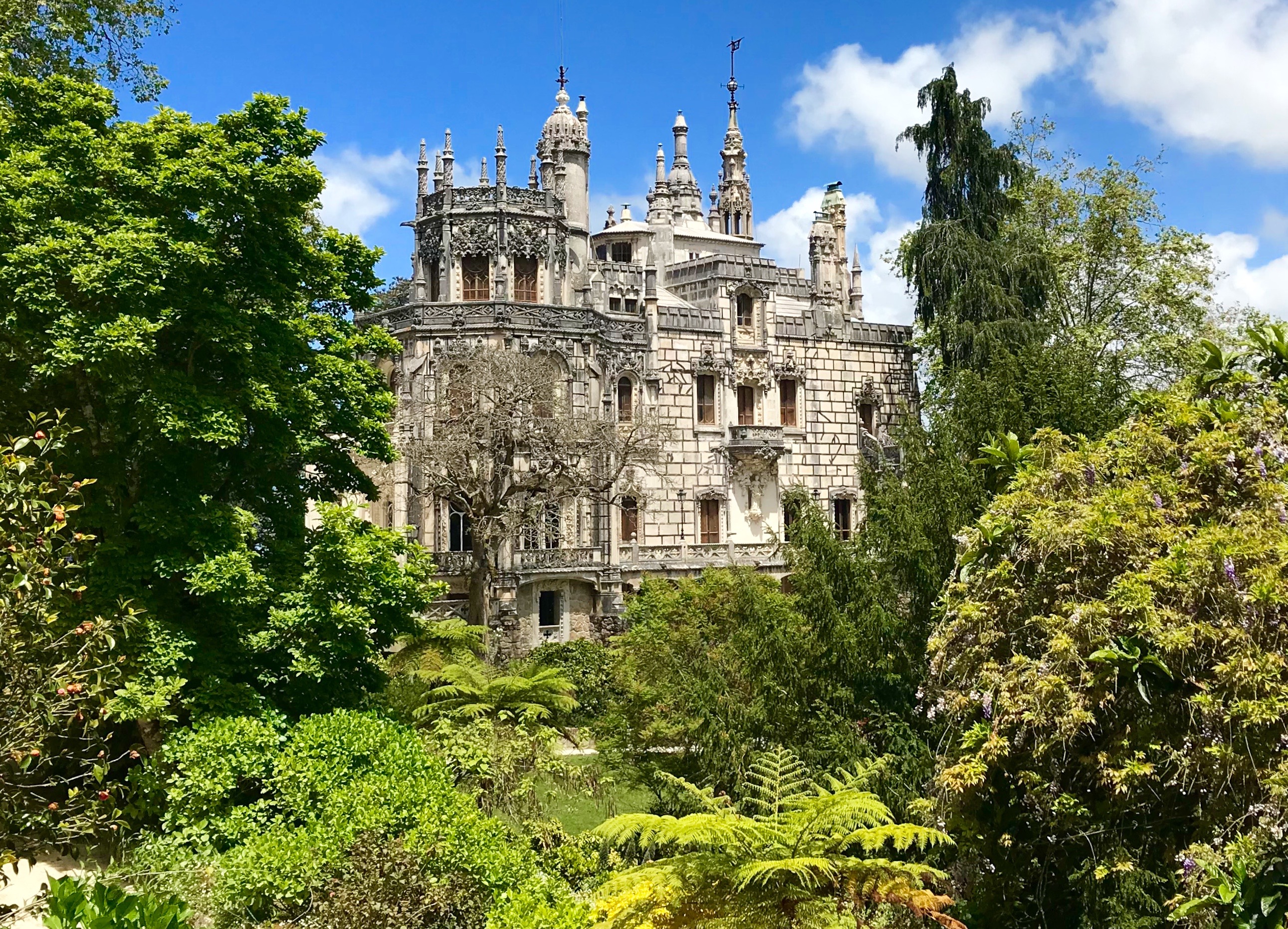
Quinta da Regaleira, owned by António Augusto Carvalho Monteiro, who was fascinated by the occult.

The Initiation Well — used for mysterious ceremonies.
Our third castle stop is the Palácio Nacional, which sits high on a hill in the middle of Sintra. We circle around looking for parking. There’s none to be had. We drive back down the hill and instead hire a Tuk-Tuk. While chatting with our driver, Gabriel, we mention our experience with the cop at Palácio da Pena.
“Oh no!!” he exclaims. “That’s Lourenço. Que Babaca! We hear stories about him robbing tourists all the time. I’m so sorry. I’ll take you for a free tour of Sintra to make up for him.”
Whirling back down the hill, Gabriel glides through the narrow cobblestone streets of the village, past the pretty parks and cafés. We learn that the English Romantic poets were infatuated with Sintra and see Lord Byron’s former home. Finally, heading back up toward Palácio Nacional, Gabriel apologizes again for the mean cop. We assure him that his generous hospitality has more than compensated for the one bad encounter.
Oddly, Palácio Nacional, one of the oldest castles in Portugal is the most modern-looking. Massive and linear, two mammoth cones cap the building, making it seem as if it’s right out of a new-age, science-fiction landscape. But in fact, Palácio Nacional dates to the late 14th century and is the only surviving royal palace in Portugal from the Middle Ages. Moorish, Gothic and Manueline architecture are evident in the structure. The huge cones are an ingenious method for venting the kitchen, constructed by King João I in the 15th century.
The Sala dos Brasões (Coats of Arms Room) displays the shields of the 72 noble families in 16th century Portugal. An incredible portrait gallery. The room is also decorated with wall-to-wall azulejos, installed during the 18th century. It’s our first look at the massive tile installations Portugal is famous for — and we are bedazzled!
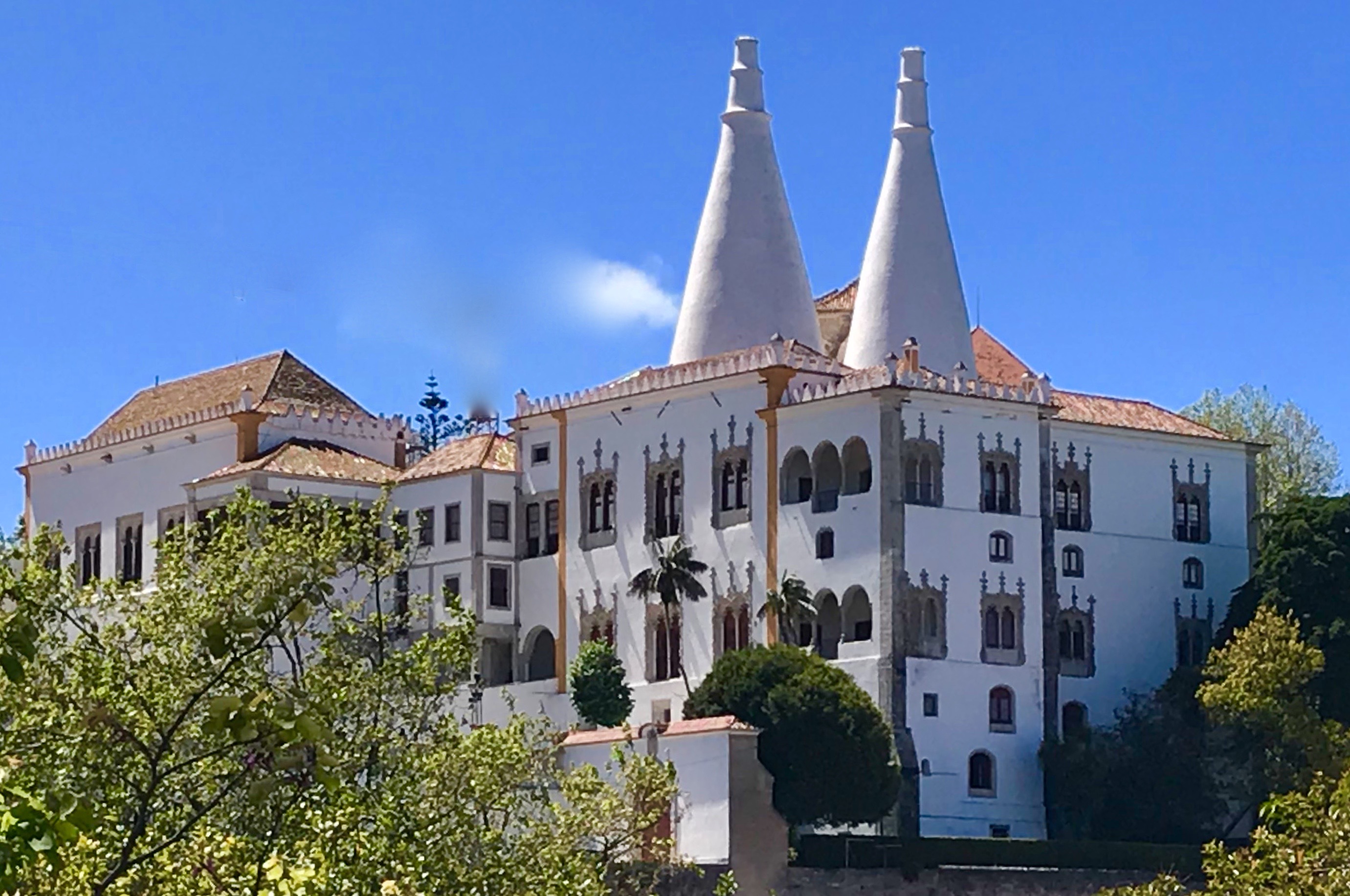
Sintra’s Palácio Nacional is the only surviving royal palace in Portugal from the Middle Ages.
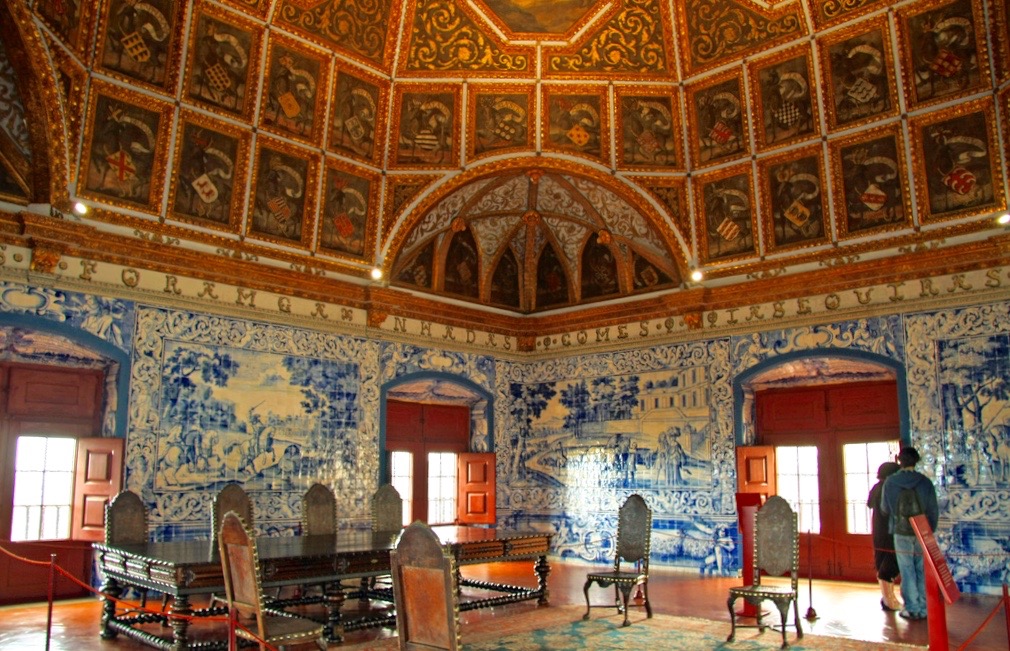
Sala dos Brasões (Coat of Arms Room) with wall-to-wall tile work. Photo courtesy of the Palácio Nacional.
MONASTERIES & AZULEJOS
Mosteiro dos Jerónimos (Jerónimos Monastery) another vast, historical site, dates back to 1501. A UNESCO World Heritage Site, the monastery is one of the best executed examples of Manueline architecture. The incredibly ornate structure is covered with hundreds upon hundreds of sculptures, columns, decorative emblems, and insignias — so many faces and creatures, the walls almost seem alive. Amazingly, we’re able to spot the statue of Dom Henrique, o Navegador (Henry the Navigator), the brilliant mastermind of Portuguese exploration and trade.
Within the church, delicate latticework creates an extraordinary canopy across the ceiling. Portuguese explorer Vasco da Gama rests in a corner, as hundreds of tourists troop by. We had hoped to visit the historic gardens and architectural wonders, but a long line of visitors is queued up at the entrance.
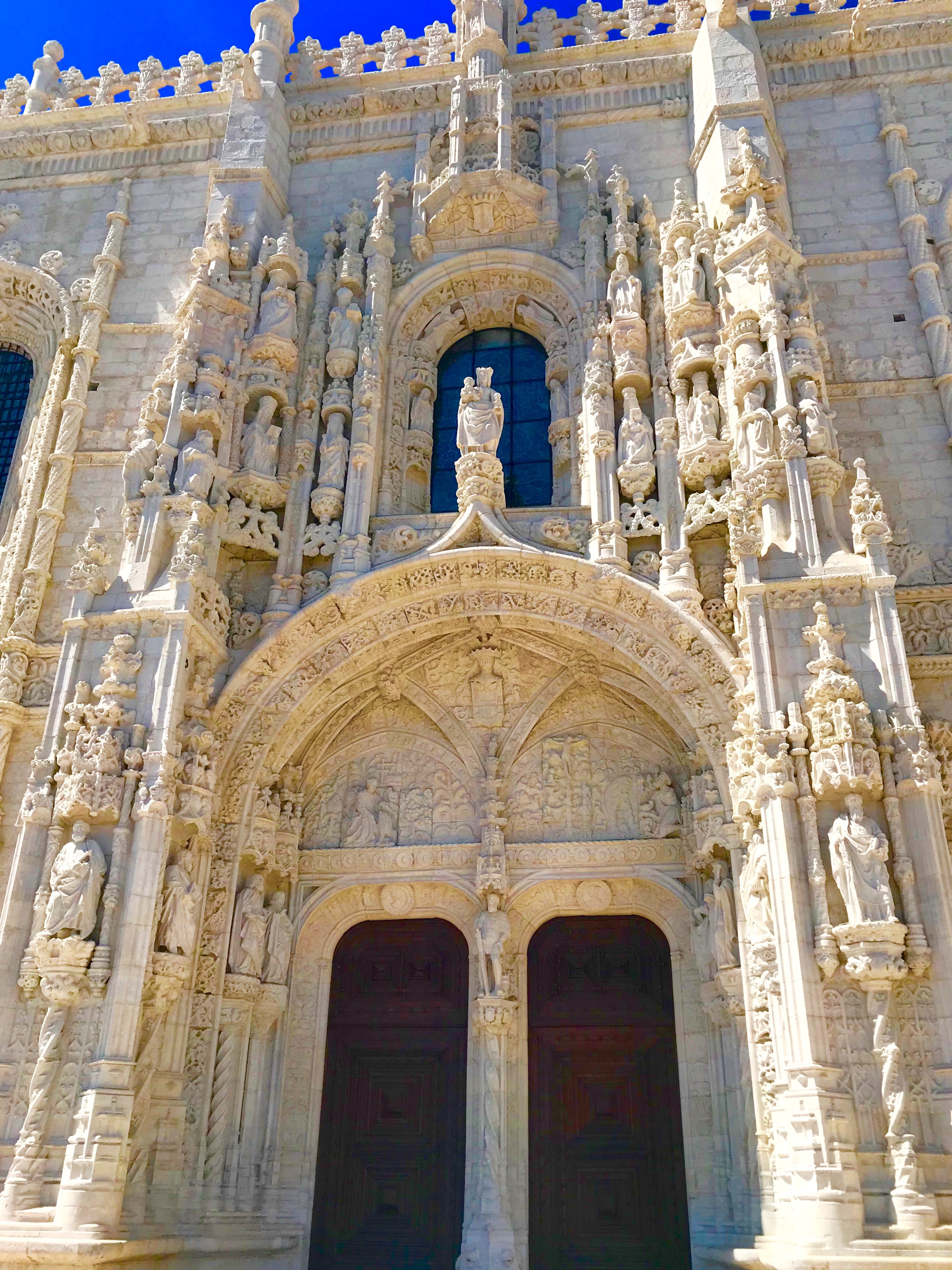
Impressively ornate entrance at Mosteiro dos Jerónimos.
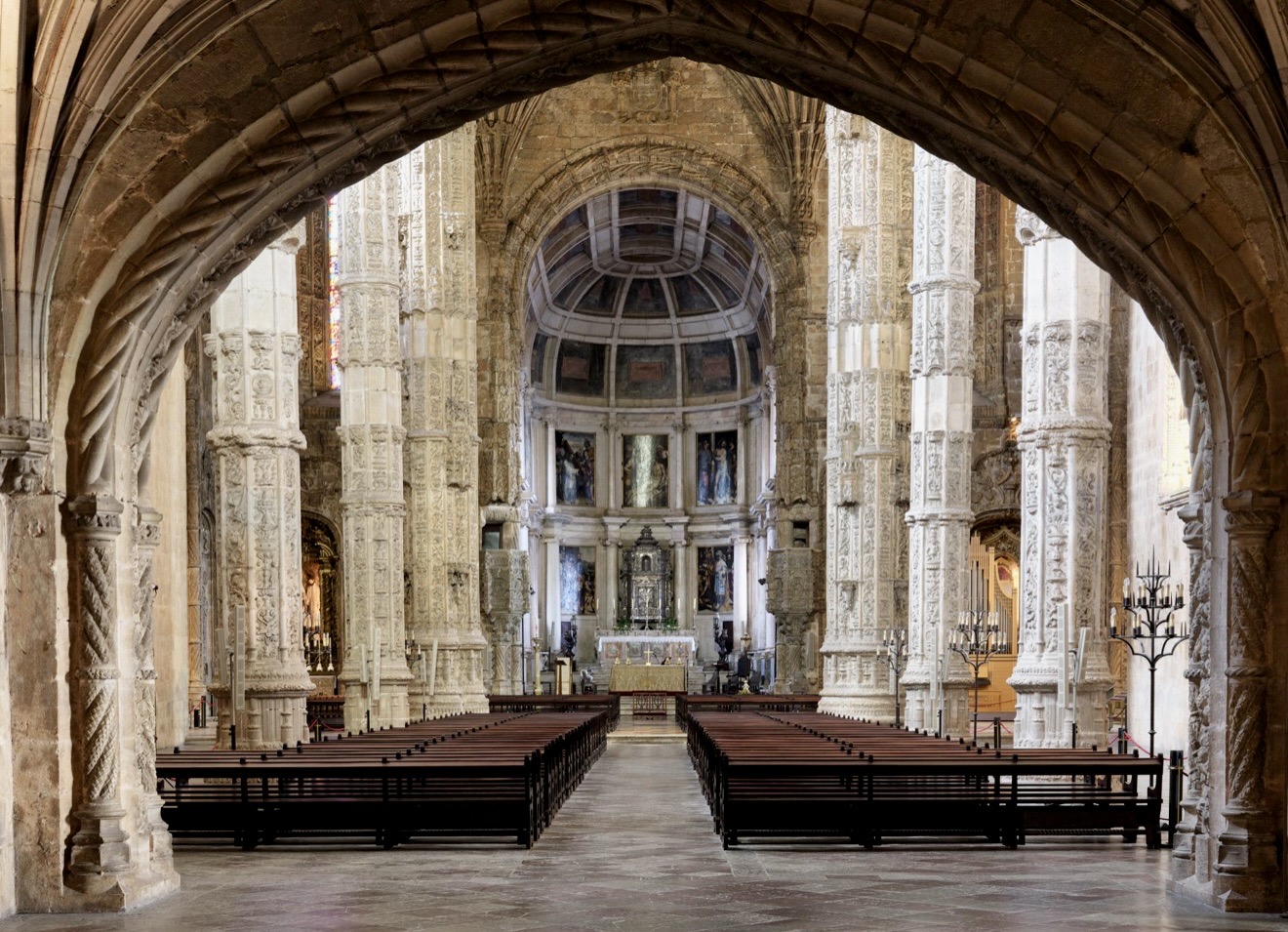
Mosteiro dos Jerónimos – one of the best executed examples of Manueline architecture. Photo courtesy of Mosteiro dos Jerónimos
Disappointed, we exit, searching now for a quick bite before resuming our tour. But more lines await at nearby restaurants. We grab a taxi instead, and ask to be taken to the Museu Nacional do Azulejo (National Tile Museum). We luck out. There are no lines and we walk right in.
Housed in what was once the Madre de Deus convent, the Museum contains room after room of exquisite tiles — contemporary works of art, as well as earlier Moorish geometrical designs.The most spectacular display is a 118 foot-long panel portraying Lisbon before the earthquake. The tiles, considered to be the largest work of its type in the country, are a detailed study of the city and waterfront circa 1730.
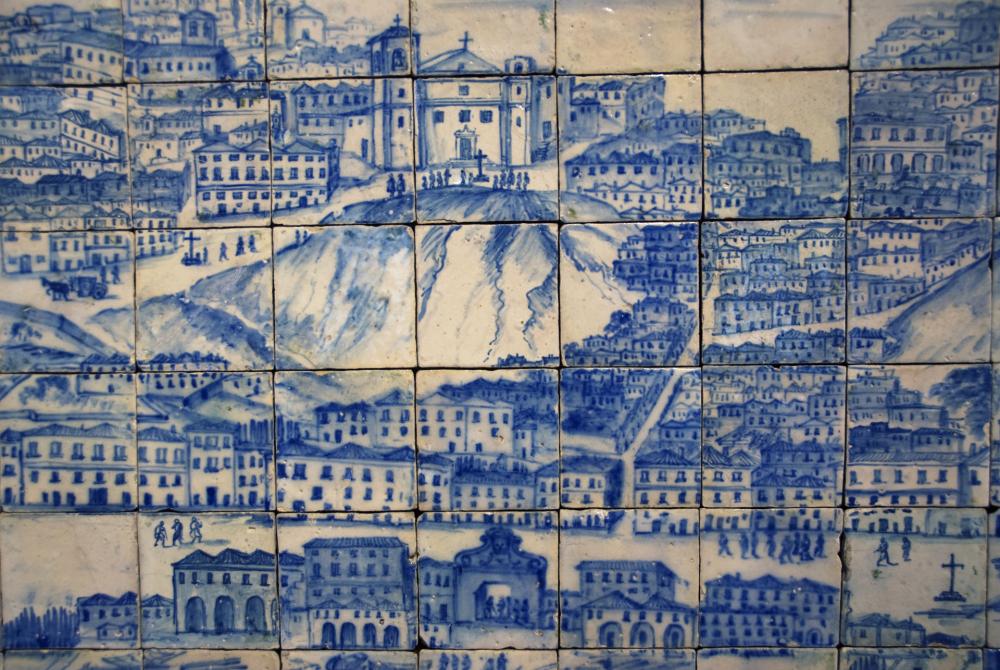
Azulejos depicting Lisbon before the 1755 earthquake. Photo courtesy of the Museu Nacional do Azulejo.
Museu Nacional do Azulejo displays hundreds of exquisite tiles collected over decades:
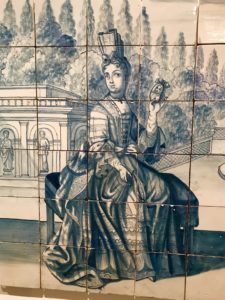
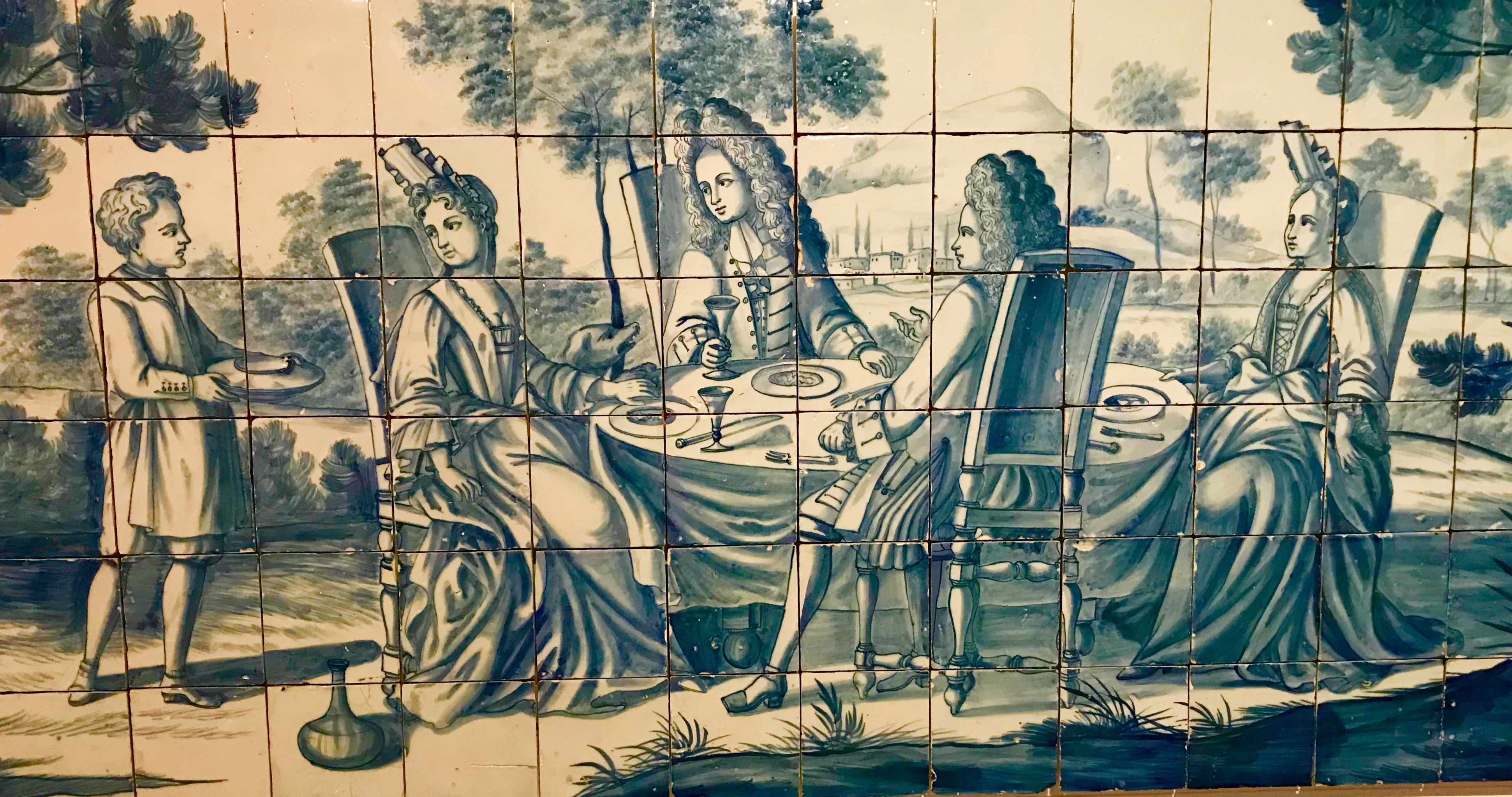
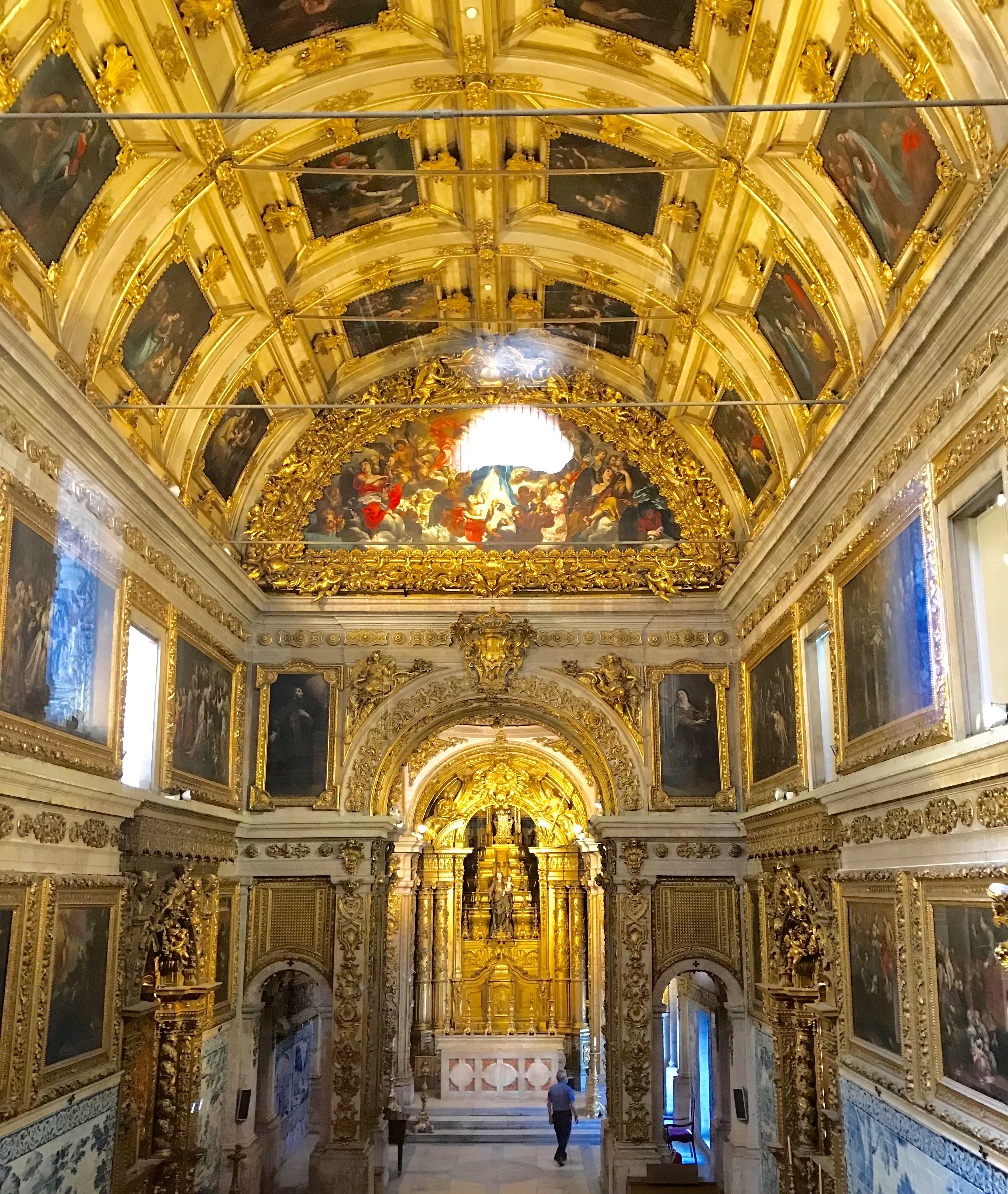
Madre de Deus Convent Chapel at the Museu Nacional do Azulejo.
A small chapel proves to be an additional wonder. Covered in gold, the gilded space is another glittering reminder that Portugal was once a grand imperial power. Today, the chapel and old convent are peaceful and meditative — especially welcome after the crush of tourists we’ve experienced since arriving in Lisbon.
A FINAL TOAST
Just around the corner from The Ivens Hotel is Artis Wine Bar. It’s small, intimate and at 7:00 pm, when we arrive it is amazingly empty! We can’t believe we have the place to ourselves. The menu is a mix of petiscos and a few main courses. We order Fried Prawns, Flamed Chouriço Sausages, Cod Cakes and Steak à la Artis. A bottle of Cartuxa–Alentejo pairs well with the appetizers. Dessert is a glass of Taylor’s Reserve 30-years. Outstanding!
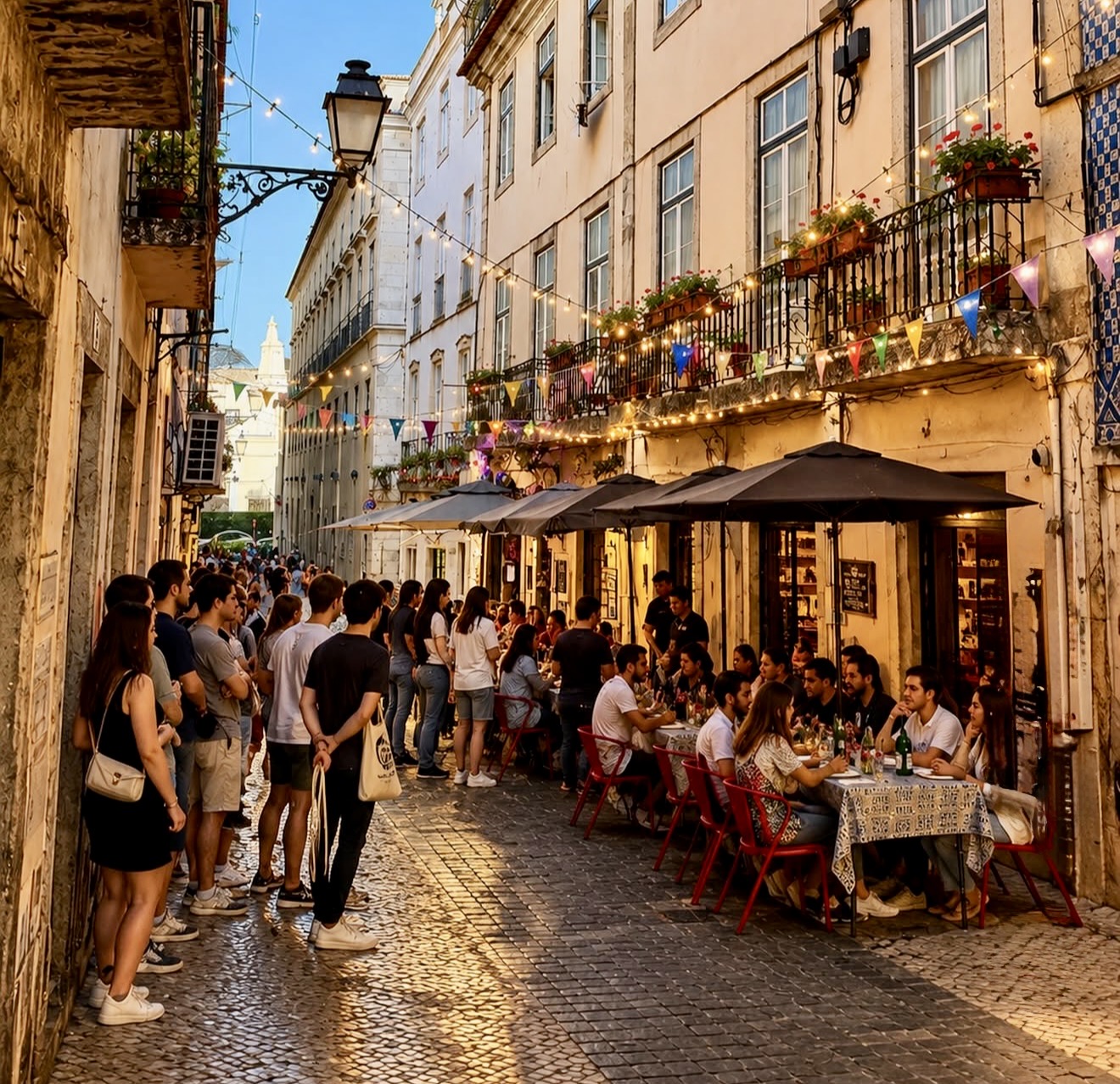
We’re still reveling in the quiet as we recieve our first plates and chat with the owner. Then slowly other couples trickle in. Finally by the time we’re toasting with our port, every table is filled — a mix of tourists and locals. Happy conversations blend with the delicious food and clinking glasses. It’s easy to see why everyone loves Lisbon. ❣️
A FEW TIPS FOR TRAVELING IN LISBON
1) Avoid visiting in high season. Portugal welcomed over 32 million tourists in 2025. Bottom line – the best time to visit Lisbon with minimal crowds is December through March.
2) Use a car as little as possible. Between the narrow roads, non-existent parking, fees, fines and “opportunistic” law-enforcement, cars are a huge headache. Make use of the ubiquitous tuk-tuks or grab an Uber. Also thoroughly research parking facilities provided by hotels to verify parking on premise is available.
3) Be ready to improvise. Closed museums or overly-crowded sites may require a quick change in plans. Lisbon is a lovely city with lots of options. Keep an open mind.
4) Don’t expect bargain basement prices. Portugal is still very affordable. However, super bargains are a thing of the past. Again, traveling off-season and researching rates and prices will help defray costs.
5) Hire a professional. Take all of the guess-work out of your trip. Book with our good friend, Olivier Dufeu of Terroir Access for personally curated tours from beginning to end with airport pickups, guided museum tours, winery visits and dining experiences — all seemlessly planned.
Finally, a special note for our Wine Lovers: If you’re interested in Port wines be sure to check out the film A Year in Port and see our interview with the filmmakers.